
Without buying a single server
Picture this: a client asks you to build them a site. You design it, you build it, you hand it over, and that's it. The relationship ends at delivery. Six months later they're on a different host, paying someone else, and you've got nothing left from that client but a one-time invoice.
Now picture the alternative: you host it too. Not on your own server, not with your own rack in a room somewhere, but through a reseller account that puts your name on infrastructure someone else maintains. The client still thinks of you as "the person who handles our website." You collect a monthly fee for as long as that relationship lasts. You never touch a server rack.
That's what HostAfrica's Ghana reseller hosting program is built for, and I spent the past weeks actually running one, not just reading about it, to see whether that promise holds up in practice.
A small Accra web agency, with about three people, currently builds WordPress or WooCommerce sites for clients like a boutique in Osu, a church planning its first website, or a neighborhood restaurant, one-off projects, paid once, then the relationship ends.
The reseller hosting program comes in four tiers:
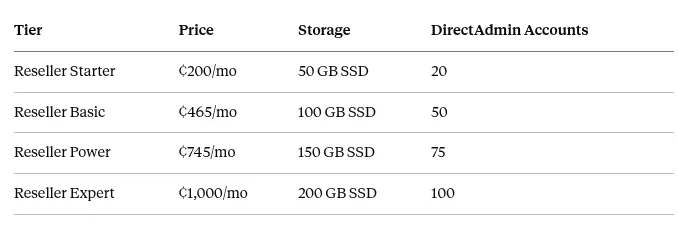
HostAfrica Reseller Pricing Plans
Every tier includes:
- Unlimited MySQL databases
- Unlimited traffic
- Unlimited email addresses
- Free Let's Encrypt SSL
- Free daily backups
- A 30-day money-back guarantee
- The DirectAdmin control panel itself.
I ran this on the starter tier; it was enough to test the model out
Getting started meant confirming a domain to attach to the account. I used one I already owned, essy.cloud; this becomes the identity your reseller nameservers run under, which is separate from any individual client's domain. Most agencies handling this kind of work today are reselling cheap, offshore-hosted shared hosting never built for reselling in the first place, plans made for a single site owner, not an agency managing a growing client list. That's the gap this program is actually built to close.
From there, inside the reseller-level DirectAdmin panel, the workflow was:
-
Creating branded packages.
As an agency, your users might have different needs; you have the option to create different user packages, but keep in mind your tier’s maximum storage size so you don’t over provision.
Under Manage User Packages, I built two:
essy_agency_starter, which had 2GB storage for simple and less intensive sites, andessy_agency_pro, which had 4GB, more headroom for a little, but complex site.
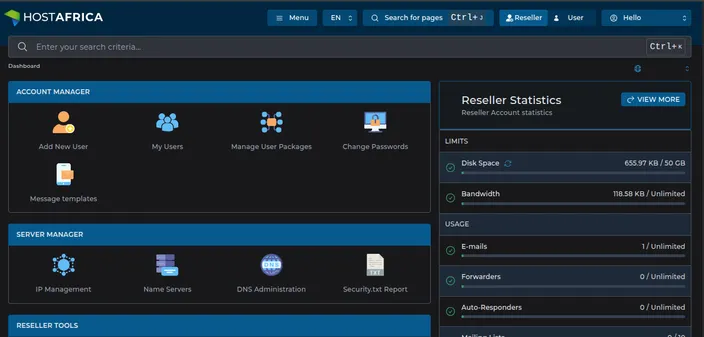
HostAfrica’s DirectAdmin Panel
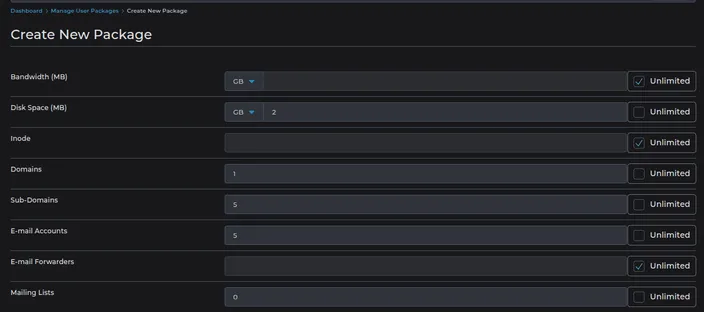
Creating a new package in DirectAdmin
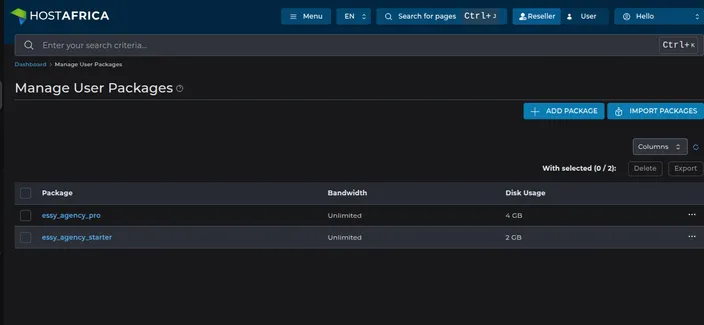
User packages created
-
Provision a test client account.
Now comes the real part, adding users to your agency. Within the reseller console, you can add users. I created an account, assigned it the Starter package, and pointed it at a subdomain of my own domain (
democlient.essy.cloud) to simulate a real client coming on board.After adding the A record to the DNS management for this user, wait for propagation to take place.
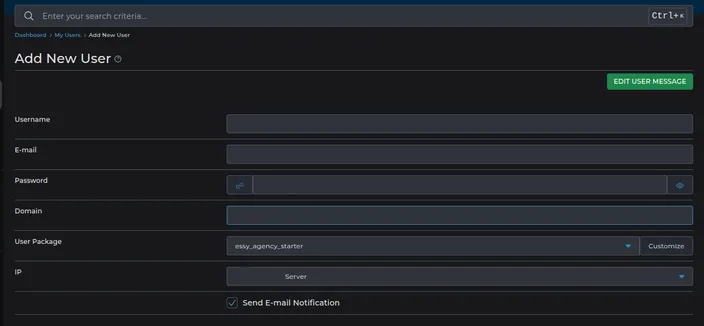
Adding a new user to my agency
-
Deploy an actual site.
Using the File Transfer Protocol or the File Manager in the console, we can transfer the user’s site to the
public_htmlof the server. The File Manager removed the SSH and terminal hurdles, and the site was live within minutes.
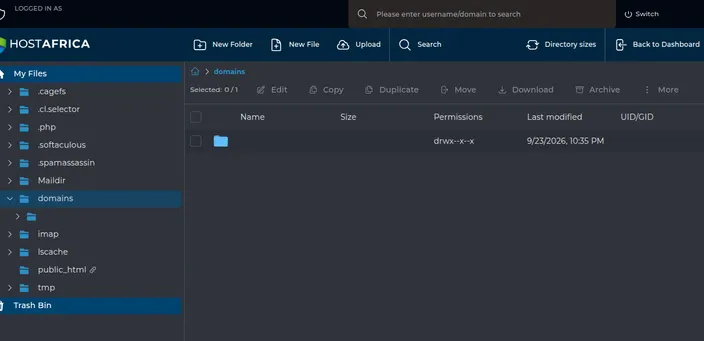
File manager for user for uploading website content
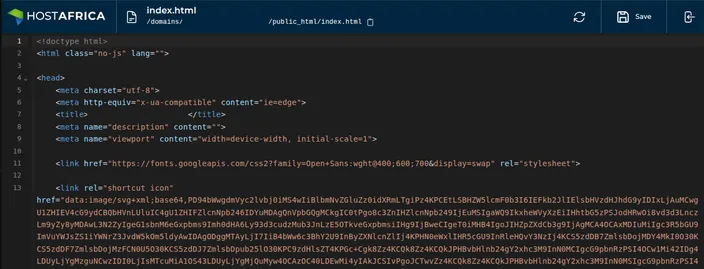
Uploading website files using File Manager

Deployed website live
-
SSL, automatically.
You don’t have to worry about your SSL certificates expiring; SSL management handles that for you automatically, renewing every 90 days.
Our domain is now secured and we can have our site protected and running for as long as we want.
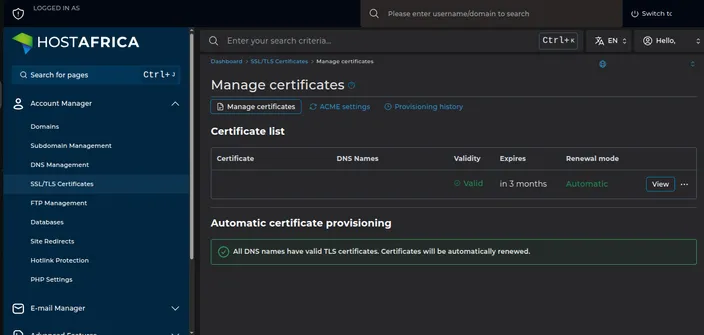
SSL automatic generation
How would our clients tell that it’s white-labeled?
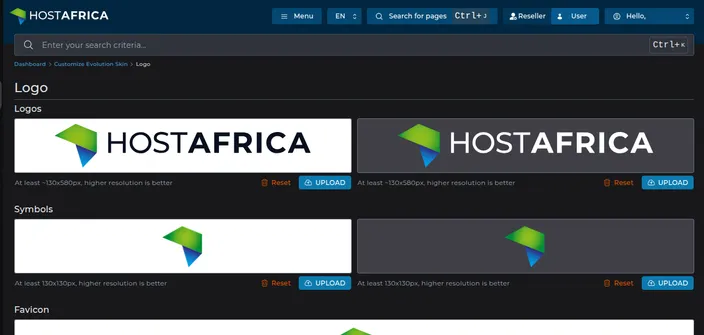
For your users to know that you’re their hosting provider, the panel allows full white-labelling using the Customise Evolution Skin. The reseller panel lets you replace default logos, colors, CSS, and menu structure with your own brand identity. The interface your clients eventually see carries your agency's branding seamlessly.
Let’s move to business metrics.
Taking the starter tier for this case, ₵200/month for the tier, capped at 20 client accounts. You have two packages; you price a basic hosting package at ₵60/month and a higher-tier one at ₵100/month:
- Breakeven: Say you get 4 starter-tier clients (4 * ₵60 = ₵240), this already covers the ₵200 wholesale cost
- 10 clients, mixed, 7 starter and 3 pro; ₵420 + ₵300 = ₵720 per month in revenue, which is ₵520 per month in margins
- At full capacity (20 accounts, mixed tiers): realistically clears ₵1,000+/month margin on a single ₵200 wholesale investment
Interesting numbers, right? That’s a recurring income an agency didn't have before, sitting on top of the design/build fee they were already charging.
How should agencies pitch now?
Instead of “We’ll build your site”, the pitch becomes: "We'll build your site, host it, keep it backed up, and keep it secure, for one monthly fee, from a team which would be available to contact when needed.”
Billing in cedis removes the friction of paying in USD, whereas local support removes the timezone lag. Because the agency has a paying reason to stay in touch every month, the client relationship doesn’t end at delivery; it starts there.
This isn’t a get-rich-quick scheme. Although it’s relatively easy to set up, you’ll need domain knowledge to set up databases, configure email settings, and handle end-user support. You should be prepared to solve technical issues for them, as they are ultimately your direct clients.
Reseller hosting isn’t a side feature; it’s a genuinely different business model. An agency that used to get paid once per client can now get paid every month for work that mostly runs itself once it's set up.
This is exactly the kind of shift getting talked about in Accra's developers and agency circles right now, at DevCongress, at GDG meetups, wherever people building for Ghanaian clients compare notes. If your agency has been doing one-off builds and wondering how to make the relationship last past delivery, this is a genuinely low-barrier way to try it.
